This is Exactly Why Brands Hate Social Media |
| This is Exactly Why Brands Hate Social Media Posted: 03 Dec 2013 07:14 AM PST
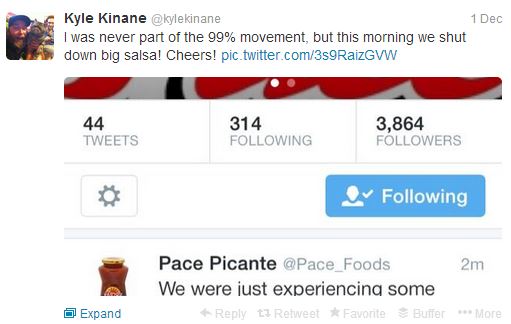
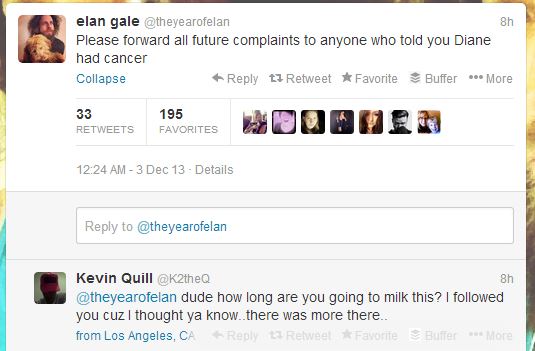
Then later it was also ‘revealed’ that the guy made the whole story up. Still with me? A day or two later, a supposed comedian got into a Twitter ‘war’ with what we were led to believe was Pace Picante’s Twitter account. This led to a series of embarrassing DMs from the brand, a few employees getting ‘fired’, then the brand shutting down its Twitter account. Then the revelation that no, wait, it wasn’t Pace Picante at all, it was another unknown comedian that was ‘pranking’ the first one. We all must have been bored as shit last weekend. Unfortunately, the popularity of Twitter has led to some people simply creating drama to draw attention to themselves (and by extension, get them bunches of followers). Double-unfortunately, these antics are always prime to get coverage on hundreds of blogs that are desperate to hit their 10-a-day quota for new posts. Now we’re upping the game with complete hoaxes. Or hoaxes within hoaxes, as we saw when one guy’s hoax about an inconsiderate passenger took an unexpected turn when she ‘got’ cancer. Which led to the guy mocking the people that followed him on Twitter for basically believing she had cancer without checking.
But the damage is pretty much done for Pace-Picante. We always talk about how brands need to be ‘more human’. Sometimes we ‘humans’ do too.
      |
| How to Staff and Structure to Become a Fan-Centric Brand Posted: 03 Dec 2013 06:00 AM PST First, please read this post on 10 Things to Remember When Creating a Brand Ambassador Program. This post is based on the framework that I introduced in my book Think Like a Rock Star: How to Create Social Media and Marketing Strategies That Turn Customers Into Fans. So if you already have a copy, this post relates to Chapter 9. The framework discussed in this post is independent of whether or not your company has a brand ambassador program. It can work with or without one. There are two many teams to focus on creating and inter-relating: 1 – The Brand Advisory Panel. This is an internal team within your brand made up primarily of select employees. 2 – The Customer Advisory Panel. This is an external team made up primarily of selected customers. The key is that both of these groups have their own responsibilities, but they also work together and are in constant contact. Core Responsibilities: Brand Advisory Panel:
Customer Advisory Panel:
Basically, both groups are designed to encouraged a flow of feedback and information. The CAP connects with customers directly and receives feedback from them. This feedback is then relayed to the BAP. The BAP then takes that feedback from the CAP and distributes it internally within the brand as appropriate, and/or supplies the CAP with feedback based on its feedback. By facilitating this flow of information from the brand to the customer and vice versa, both brand and customer has a better understanding of each other. Which means the brand can more effectively market to the customer, design products and services it is more likely to purchase, etc. How to Staff the Brand Advisory Panel and the Customer Advisory Panel To a great degree, the size of both the BAP and CAP is a direct function of the brand’s resources. There are a few considerations regardless of the available resources: 1 – There should be at least one employee who is a member of the CAP and there should be at least one customer that is a member of the BAP. For example, you want a brand employee to be a member of the CAP so that employee can work with the customers that are a part of the CAP to give them the brand’s point of view. Likewise, you want a customer to be a member of the BAP to ensure that the voice of the customer is heard and understood by the BAP at all times. 2 – If you have a dedicated Brand Ambassador Program, the BAP will oversee this program. 3 – Customers who are selected to the CAP should be considered at minimum part-time employees and should be compensated. I cover this process in much greater detail in the book including a breakdown of the exact employee roles on both the BAP and CAP, and how to vet potential customer candidates for the CAP. But the main points to remember if you want to create a similar structure for your brand: 1 – Create an internal (brand-side) and external (customer-side) group, each of which is responsible for collecting feedback from the brand/customer and relaying it to the other group, and vice versa. 2 – Have a specific feedback flow within your brand, so that your brand can take feedback from your customer group and communicate that feedback internally to the area within your brand that is best suited to act on that feedback. 3 – Work with your customer group to ensure that the brand’s point of view is understood and relayed to the customer, and vice versa. Again the overarching goal of this structure is to facilitate the flow of feedback and information between the customer and the brand.    |
| You are subscribed to email updates from MackCollier.com - Social Media Training and Consulting To stop receiving these emails, you may unsubscribe now. | Email delivery powered by Google |
| Google Inc., 20 West Kinzie, Chicago IL USA 60610 | |


0 comments:
Post a Comment